Opportunities and Resources
Opportunities and Resources
At any time in your search, you are encouraged to approach a faculty member for advice and to ask about pursuing independent research, either as a job (see Beyond Barnard) or as part of an academic study or research program. We encourage you to make an appointment with departmental faculty either as co-chairs, instructors, or advisers. There are opportunities during the year in our department and our affiliates and with paid summer opportunities such as SRI or the Lamont and Earth Institute programs. See below for more info:
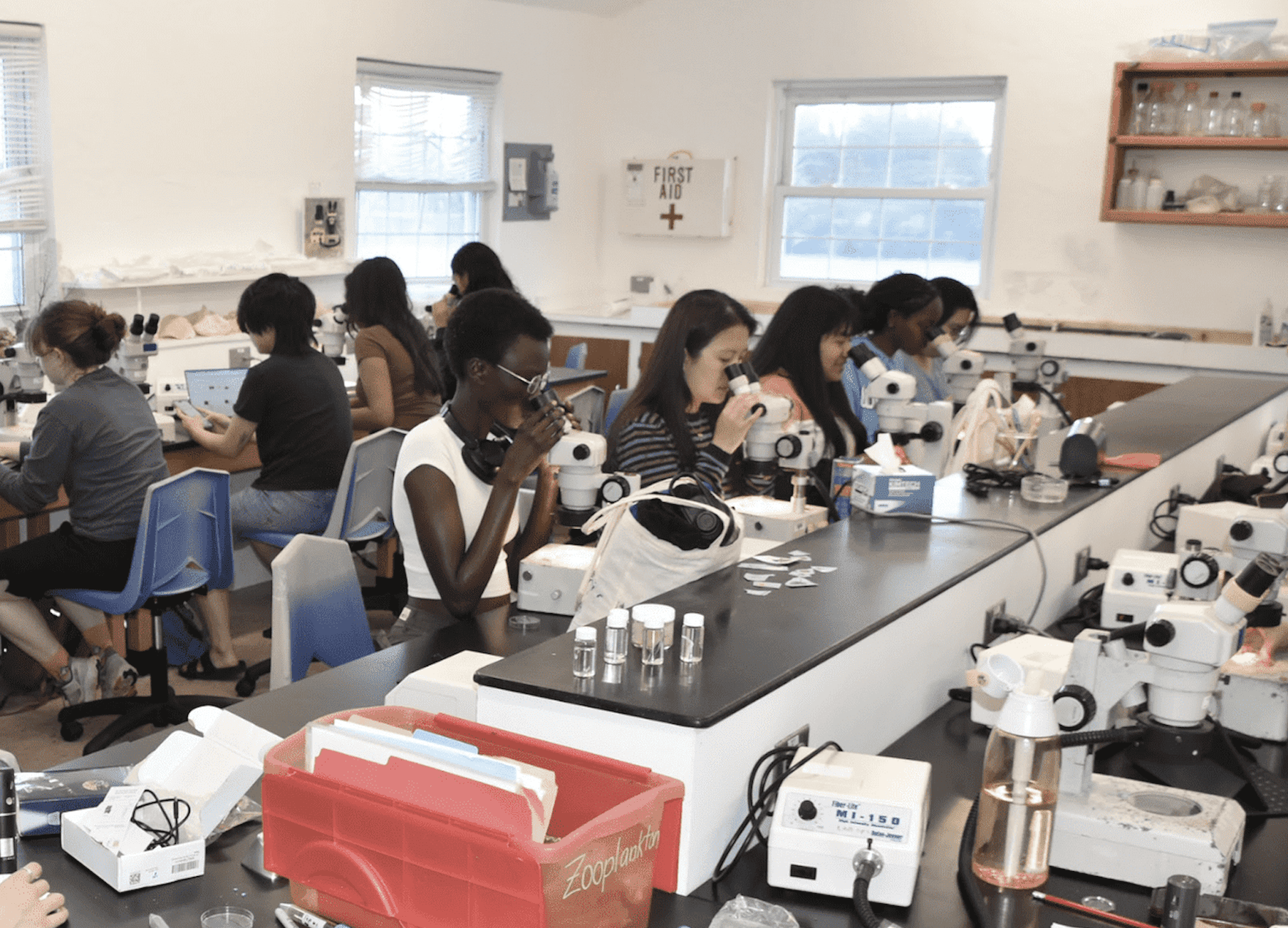
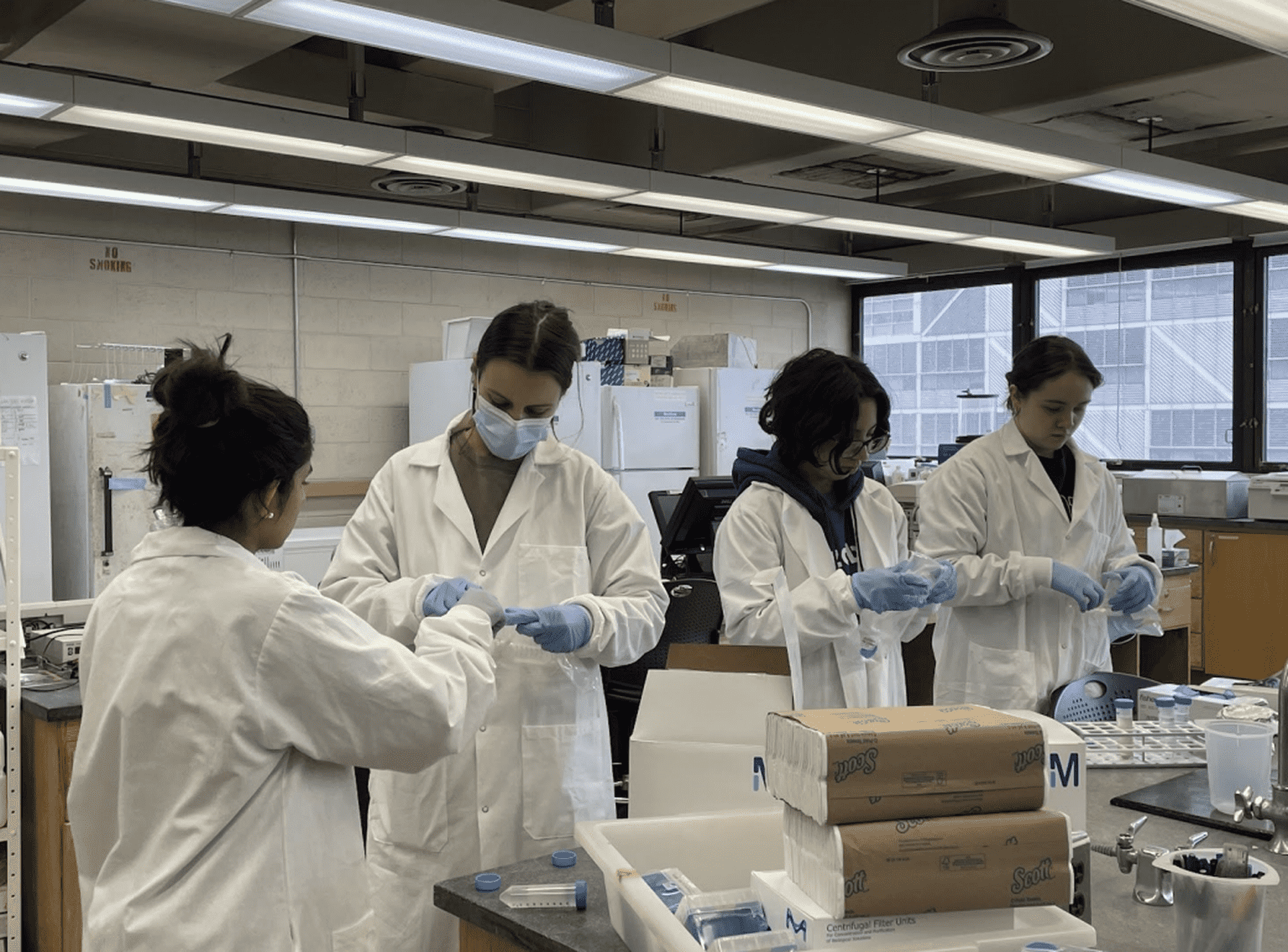
Undergraduate Research Opportunities
- Barnard's Summer Research Institute (SRI) is a 10-week program for Barnard students who want to conduct scientific research over the summer. Students work directly with a mentor at Barnard College, Columbia University, or other institutions. The SRI provides a common experience for students, providing additional training and opportunities to build skills, along with faculty lectures, alumnae panel discussions, social events, and more. Students receive funding, provided by grants, alumnae donors, and the Office of the Provost. Students interested in working in an external lab may do so but must ask if the mentor can provide full or partial funding. Many of our Junior major SRI participants use their work as foundations for their Senior Thesis Projects. Subsidized campus housing is available for those who apply.
- The Earth Intern Program for Columbia and Barnard undergraduates provides a summer research experience in Environmental sciences. The program features a hands-on research project under the supervision of an LDEO-affiliated scientist, as well as special lectures, workshops, and fieldtrips. As BC/CU junior, you have a very good chance of being admitted for this research funded by the Earth Institute and our Junior majors usually use this research for their Senior Thesis. A stipend and campus housing is included. The deadline is usually in March.
- The Lamont Summer Intern Program for undergraduates from U.S. colleges and universities provides a summer research experience in Earth and ocean sciences. The program features a hands-on research project under the supervision of a Columbia-affiliated scientist, as well as special lectures, workshops, and fieldtrips. When applying to this program you will compete with students from all over the country. Our majors do well in this application process and usually perform this research in the summer of their Junior year as a basis for their Senior Thesis. This program is an REU, Research Experience for Undergraduates, and provides research opportunities funded by NSF. A stipend and campus housing is included. The deadline is usually in March.
Details on applying to these programs can be found under the links above. For information on other campus-wide research opportunities, check out Barnard's Research Opportunities page.
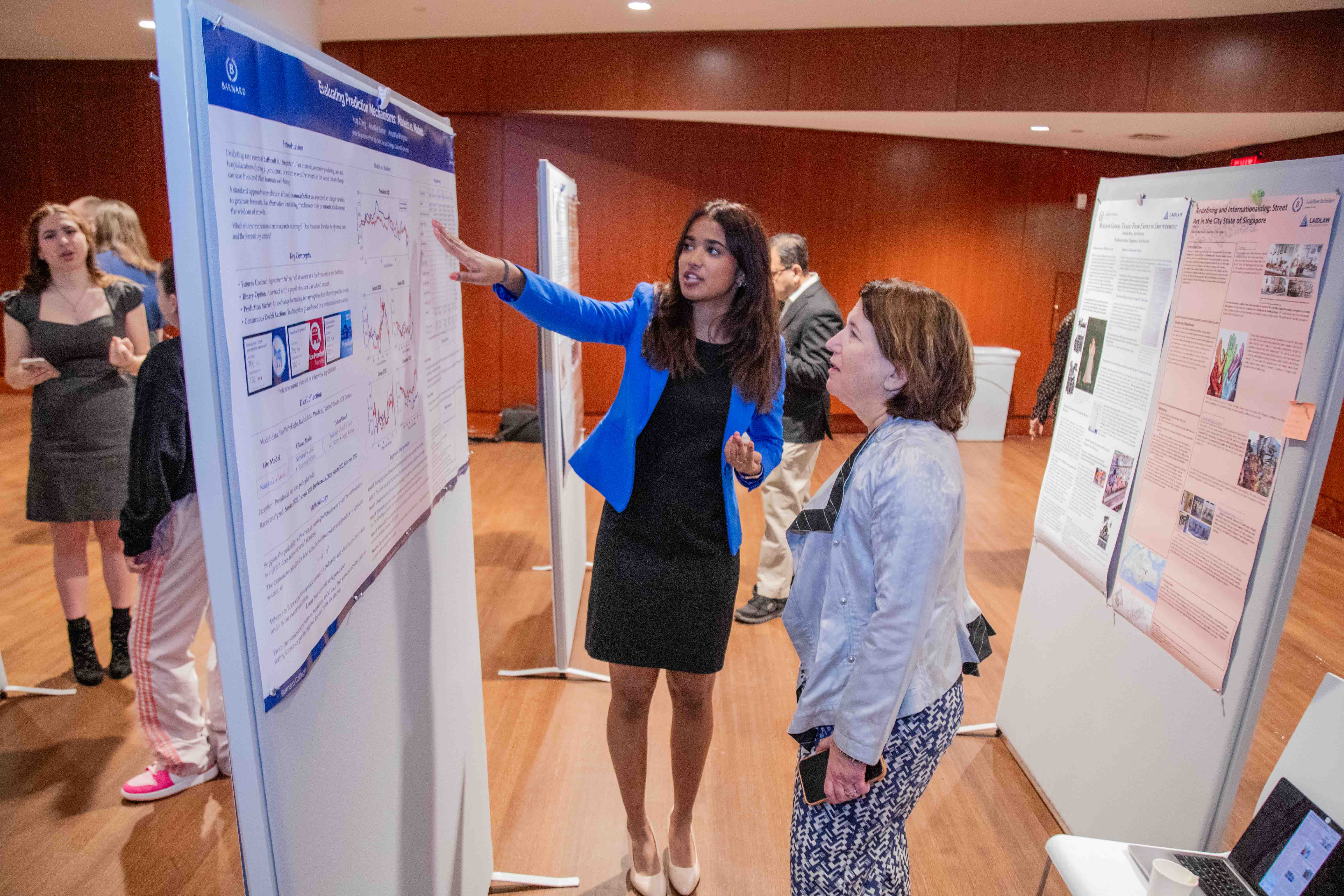
How to find research opportunities
- Find your passion:
- Did you read/learn about exciting research? Did you meet any exciting researchers?
- Define a few broader areas of interest
- Find researchers who work in your fields of interest
- Look at websites, authors of key papers, etc.
- Consider Barnard faculty members
- Look through the senior seminar directory and the SRI directory to find researchers who have worked with other Barnard students. This also gives you a good idea of their recent projects.
- You may wish to apply to formal internship programs, with deadlines in January through March
- Keep in mind that during the semester you can't get academic credit and get paid for the same work
- Professors Stute and Mailloux can help with coordinating research opportunities
- Talk with the Environmental Science Student Mentors to learn more about research experiences, how to find a mentor, etc. Contact Sumayya Mokit (smokit@barnard.edu) to connect with a mentor.
Junior Year Summer & Senior Research Projects
We very strongly encourage all majors to do a summer internship between their junior and senior years. There are many opportunities discussed below for paid and unpaid internships. Many of these summer projects (but not all) might result in a senior thesis in the framework of the senior seminar. This is very much recommended as it better supports you in the senior seminar class.
Senior thesis website
Look at the Senior Thesis website to get an idea of what is happening down the line for information, like:
- How to Pick a Good Thesis Problem
- Letter to the research mentor (spell out roles of those involved in your thesis research)
- Look at titles of presentations at past poster sessions
- Senior Research Seminar, EESC BC3800/3801
Other Research Opportunities
- Look for Catherine Cook's emails. Barnard students can join the departmental email list for the latest opportunities.
- National Science Foundation, Research Experience for Undergraduates (REU)
- BC Biology department internship opportunity links
- American Museum of Natural History
- BC internship grants
Study Abroad
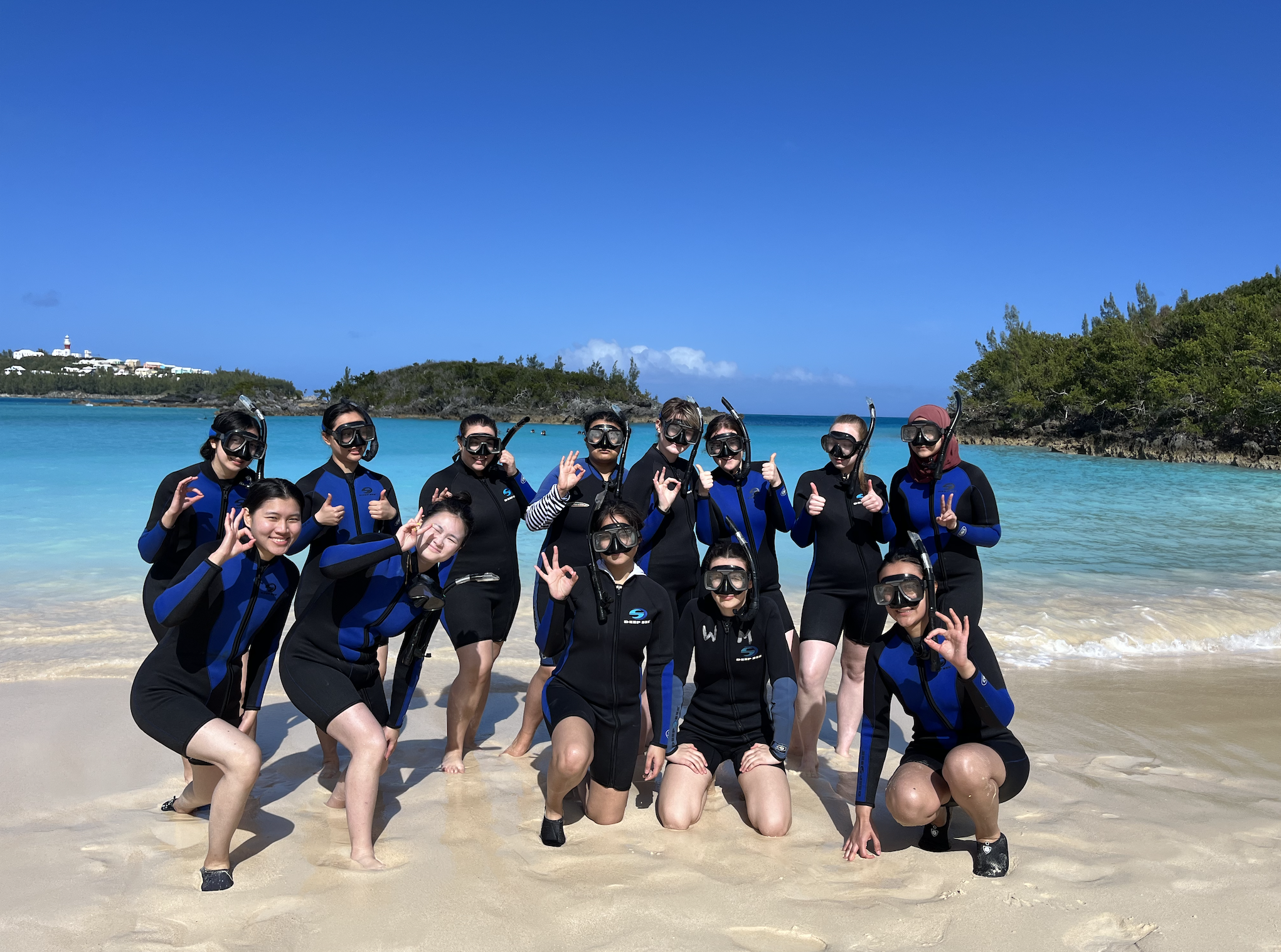
We strongly recommend students from the Environmental Science Department go to study abroad. Students have participated in various programs such as DIS in Copenhagen, SIT in Australia, Panama, and Iceland, and SFS in Costa Rica.
If you know you want to study abroad next year, be sure to submit your application through Barnard Global by March. Students should consider applying during their sophomore year. To learn about what our students have done abroad, please attend our Study Abroad Luncheon which is usually hosted in the beginning of the Fall Semester. If you have questions about the event, email Catherine Cook (ccook@barnard.edu)
Study abroad resources:
Job and Internship Resources
- Beyond Barnard
- Glassdoor (Jobs & Careers)
- Environmental Protection Agency includes US EPA Career and Internship Listings
- The Environmental Careers Organization for Internships and Careers, including partnerships with governmental, corporate,e and nonprofit agencies. Also includes ECO publications on careers.
- Environmental Jobs and Careers
- EnviroLink
- ScienceCareers
- National Science Foundation (NSF) - search for Research Experiences for Undergraduates
- Orion Grassroots Jobsource is a network of over 500 grassroots organizations and has place-based work in conservation, education, restoration, and environmental justice.
If you are interested in Graduate School, please speak with your major advisor to make sure that you have taken the right prerequisites for the programs you are interested in. For more information and resources on applying to graduate programs, please visit Beyond Barnard.
Attending our career night with Beyond Barnard and other events would be a great way to connect with alums who have gone to graduate school. Major advisors can also connect you with alums if you have someone you want to speak with.
The E3B Graduate Outreach Committee also hosts workshops for students in the Spring Semester. Watch out for Catherine Cook’s emails about when they happen. You can also find some resources they share on the prospective PhD student website.
Columbia University Undergraduate Departments
Here are a few Columbia University Departments, our majors frequently interact with
DEES The Department of Earth and Environmental Science, Columbia College.
E3B The Department of Ecology, Evolution, and Environmental Biology, Columbia College.
EEE The Department of Earth and Environmental Engineering, Fu Foundation School of Engineering and Applied Science
SDEV Undergraduate Program in Sustainable Development, Columbia College.
Institutes, Organizations and Projects
- Black Rock Forest Consortium
- Lamont Doherty Earth Observatory
- Columbia Climate School
- American Museum of Natural History
- Summer Research Institute (SRI) at Barnard
- Woods Hole Oceanographic Institution
- Environmental Consortium of Hudson Valley Colleges & Universities
- Environmental Health Sciences at The Mailman School of Public Health